
Most hot tubs in the Valley don't die all at once. The heater quits one August, the cover gets waterlogged, the cabinet starts to peel, and a few years later there's a 700-pound box on the patio that nobody has used since the kids were in middle school. If that sounds familiar, here's how getting rid of it actually works.
Signs it's time to let it go
A spa can be worth fixing. A new pump or heater element is a normal repair. But when several of these are true at once, removal usually makes more sense than another round of parts:
- The shell is cracked or blistered. Shell repairs rarely last on an older acrylic tub, and leaks get into the foam underneath.
- The cabinet is rotting or the frame is soft. Valley sprinklers and summer heat are hard on wood siding. Once the frame goes, the tub can sag on the pad.
- It hasn't been filled in a year or more. Dry seals and gaskets crack, so a tub that sat empty often leaks when you refill it.
- The power bill jumps every time it's on. Older spas with worn covers can run for hours a day just to hold temperature.
- You want the space back. A patio, a garden bed or a spot for a shade structure is a perfectly good reason on its own.
Your three options
1. Sell it or give it away
If the tub still heats and holds water, someone on Marketplace or Craigslist may want it. Free spas get picked up fast. The catch: the buyer needs a trailer, four or five strong people and a way through your gate, and plenty of "I'll be there Saturday" pickups never show. If nobody bites within a couple of weeks, it's probably not going anywhere in one piece.
2. Take it apart yourself
It can be done with a reciprocating saw, a pry bar, gloves and a free weekend. Expect fiberglass dust, spray foam everywhere and a pile far bigger than you'd guess, which then has to be hauled to the landfill in several pickup loads. Most people who try this once hire it out the next time.
3. Have it hauled away
A removal crew handles everything except the electrical disconnect (more on that below): cutting the tub down if it won't fit through the side yard, carrying it out, loading, hauling, recycling the metal parts and sweeping up. For most Valley homeowners this is the fastest route from "eyesore" to "empty pad", usually in a single visit.
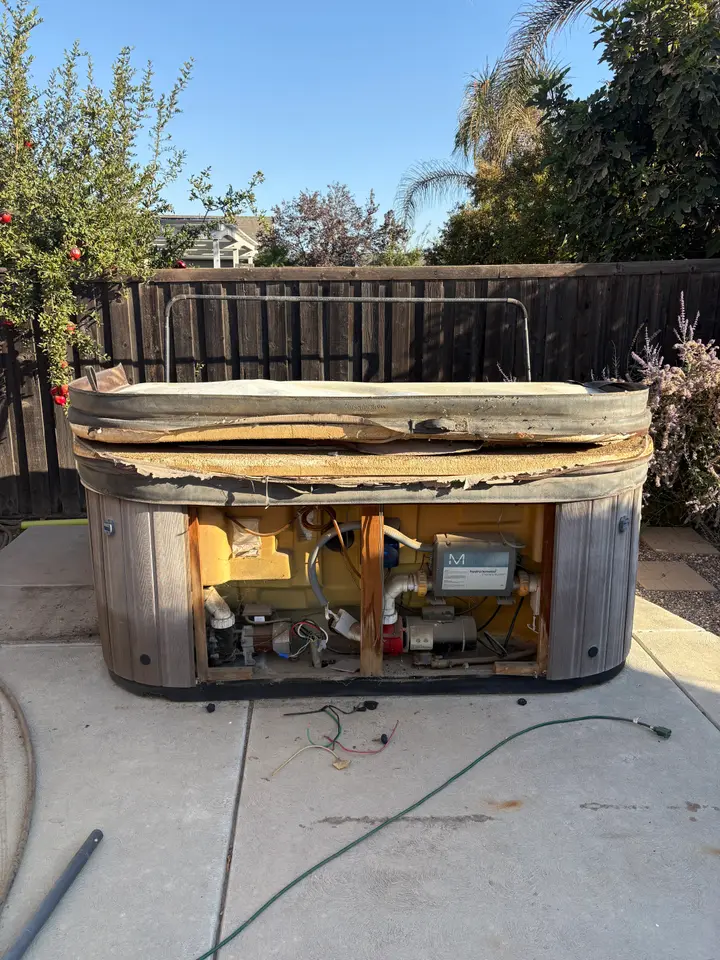
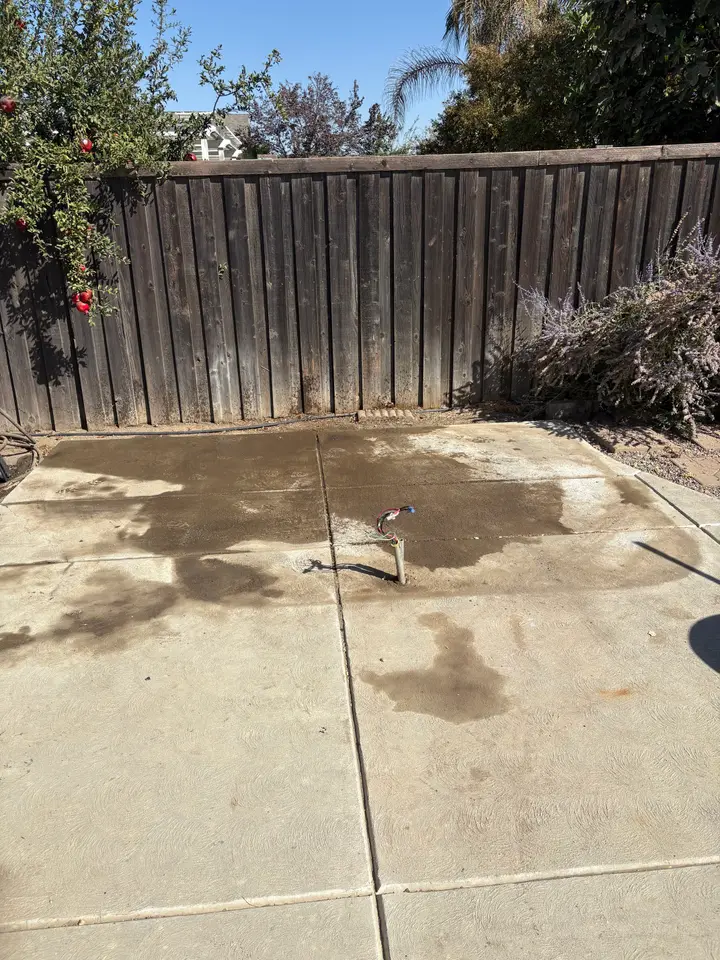 BeforeAfter
Step one: drain it the right way
A full hot tub holds anywhere from 300 to 500 gallons, and every gallon weighs a little over eight pounds. Nobody can move it full, so draining comes first.
- Turn the power off first. Running the pump or heater dry can burn them out, and it's not safe to drain a live tub.
- Use the drain spigot or a submersible pump. The built-in spigot with a garden hose works but is slow, often most of a day. A cheap utility pump from the hardware store does it in an hour or two.
- Mind where the water goes. Spa water is full of chlorine or bromine. Don't send it down the gutter or into a storm drain; in California those drains run to creeks and canals, not a treatment plant. Let the sanitizer fade for several days with the cover off, then water a lawn with it, or ask your city how it wants spa water handled.
- Drain it a day or two early. Water sits in the plumbing and footwell. A little time to dry out makes the tub lighter and the job cleaner.
Step two: get the power disconnected
Most spas run on a dedicated 240-volt circuit with a disconnect box mounted near the tub. Shut it off at the breaker, then have an electrician disconnect and cap the wiring so nothing is live when the tub is lifted off the pad. It's a quick visit for them, and it's the one part of the job you shouldn't leave to the hauling crew or do yourself unless you're qualified.
If the tub plugs into a regular outlet (some small "plug and play" spas do), just unplug it.
Step three: measure the way out
This is where most Valley jobs get decided. A typical spa is around 7 by 7 feet and close to 3 feet tall, and weighs somewhere between 500 and 900 pounds empty. Side yards in a lot of Fresno, Clovis and Hanford tract homes are about 4 feet wide with a 3- or 4-foot gate.
- Measure the narrowest point between the tub and the street: gate, side yard, fence posts, AC unit, gas meter.
- Note anything in the way: steps, planters, a block wall, a deck built around the tub.
- Snap a few photos of the tub, the path and the gate. A crew can tell from those whether the tub can go out whole on its side or needs to be cut down.
If it won't fit, that's normal. Cutting a spa into sections on the patio is routine and doesn't damage anything around it.
City of Fresno homes: Operation Clean Up will take a spa up to 8 × 8 feet, but only if you cut it into 4 × 4 sections yourself. See our guide to getting rid of junk in Fresno for the rest of the rules.
What happens on removal day
- Walk-through and price. The crew looks at the tub and the path and gives you one firm price before anything starts.
- Cover, steps and panels come off first. These go on the truck separately.
- Cut down if needed. The shell, frame and foam are sectioned into pieces two or three people can carry.
- Carry out and load. Pumps, heaters and motors are set aside as scrap metal for recycling.
- Clean up. Foam bits and debris get picked up and the pad gets swept, so what's left is a clean slab.
For most backyard spas the whole thing takes one to three hours.
What to do with the pad afterward
An empty concrete pad is a blank spot that's already level, drained and often already wired. A few ideas Valley homeowners use:
- A shade sail or pergola with outdoor seating, which gets far more use than a hot tub in a 105-degree July.
- A fire pit area for the cooler months.
- Raised garden beds or a spot for the grill.
- A storage shed, if the pad is big enough.
If the pad itself is cracked and you want it gone too, ask when you get your quote.
Quick prep checklist
- Power off at the breaker and the spa disconnected by an electrician
- Water drained to the right place, ideally a day or two ahead
- Gate unlocked and pets inside
- Path from the tub to the driveway cleared of hoses, pots and furniture
- Photos of the tub and gate sent with your quote request
Questions we get about hot tubs
How long does hot tub removal take?
Most backyard spas take one to three hours once the tub is drained and the power is off. Tubs set into a deck or behind a narrow gate take longer because they have to be cut down in place.
Do I need to drain the hot tub before removal?
Yes. A full spa holds hundreds of gallons, and water makes it far too heavy to move. Start draining a day or two ahead so the shell has time to dry out.
Can you take the cover, steps and gazebo too?
Yes. Covers, steps, cover lifters, side panels and most backyard gazebos can go on the same trip. Mention them when you ask for a quote.
Is any of a hot tub recyclable?
Some of it. The pump, heater and motor are scrap metal, and a wood or metal frame can often be recycled. The acrylic shell and foam usually can't, so those go to the landfill.